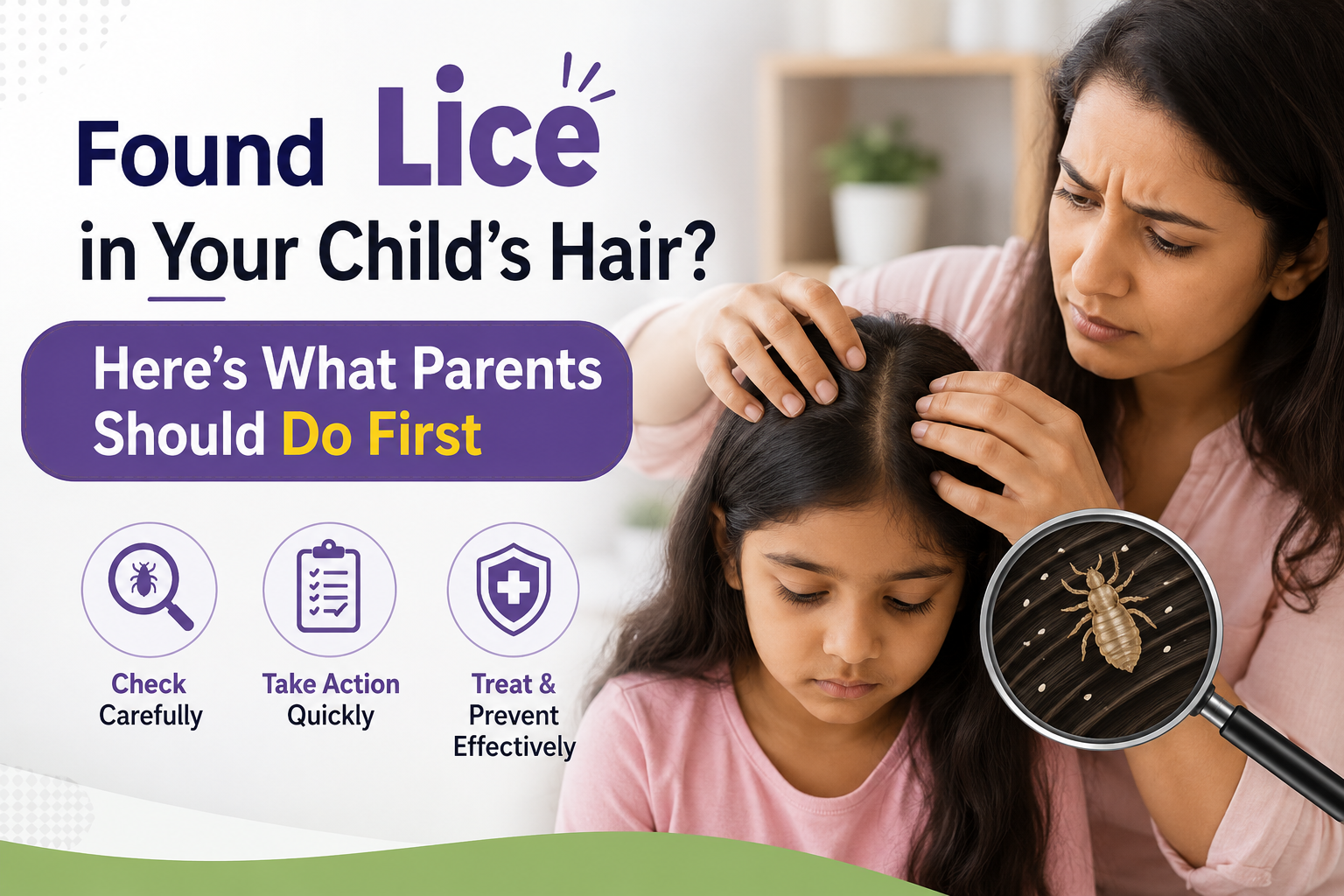
Seeing a live louse or tiny eggs in your child’s hair can be an unsettling moment for any parent. Your first instinct may be to act immediately, but knowing what to do, and what not to do, can save time, reduce stress, and help prevent the infestation from spreading.
In this guide, we’ll take you through the first steps to follow after discovering head lice, explain common mistakes parents make, and help you decide when additional support may be needed.
Key Takeaways
– Stay calm. Head lice are common and do not indicate poor hygiene.
– Confirm that it is an active infestation before starting treatment.
– Check everyone in the household, but only treat those with an active infestation.
– Avoid unnecessary cleaning or using pesticides around the home or throwing items.
– Acting early usually makes head lice easier to manage.
Step 1: Confirm It’s Really Head Lice
Before taking any action, make sure you’re dealing with an active head lice infestation.
An itchy scalp alone doesn’t necessarily mean your child has head lice. Dry skin, dandruff, eczema, and other scalp conditions can cause similar symptoms.
Carefully inspect the hair in areas where head lice are most commonly found:
– Behind the ears
– Around the neckline
– Along the hairline
– Around the crown of the head
Look for:
– Live crawling lice
– Viable eggs (nits) attached firmly to the hair close to the scalp
– Signs of scratching or scalp irritation
For a more accurate check, use a fine-toothed lice comb. Combing small sections of hair over a white tissue or paper towel can make it easier to spot live lice and confirm whether there is an active infestation.
Unlike dandruff or hair debris, viable nits are firmly attached to the hair shaft and cannot simply be brushed away.
If you’re unsure what you’re seeing, seeking professional advice before beginning treatment can help avoid unnecessary products or treatments.
Step 2: Stay Calm
Although discovering head lice can feel overwhelming, there’s no need to panic.
Head lice are extremely common in children because they spend so much time playing, learning, and interacting closely with one another. Having head lice does not mean your child or your home is unclean.
Remaining calm helps you make practical decisions rather than rushing into treatments or cleaning routines that may not be necessary.
Step 3: Reduce the Risk of Spreading Lice
Until the infestation has been addressed, taking a few simple precautions can help reduce the chance of lice spreading to other family members.
You can help by:
– Avoiding direct head-to-head contact.
– Tying back long hair where practical.
– Avoiding sharing hats, scarves, helmets, brushes, combs, and hair accessories.
– Using separate pillows if family members regularly share a bed.
These small changes can make a meaningful difference while you organise the next steps.
Step 4: Check the Rest of the Household
If one child has head lice, it’s sensible to check everyone living in the same home.
Parents, siblings, and other caregivers may also have been exposed through close head-to-head contact.
However, not everyone needs treatment.
Only people with an active infestation, meaning live lice or viable eggs, generally require removal. Treating family members who do not have head lice offers little benefit and may expose them to unnecessary products or procedures.
Early identification also helps prevent a single case from becoming a household infestation.
Step 5: Inform Anyone Who May Have Been Exposed
If your child has spent time in close head-to-head contact with friends or relatives, consider letting their parents or caregivers know.
While this conversation may feel uncomfortable, giving others the opportunity to check their children’s hair can help identify infestations early and reduce further spread.
If your child attends school, nursery, or childcare, follow the setting’s policy for reporting head lice. Many schools encourage parents to notify them so other families can be reminded to perform hair checks.
What Not to Do
It’s easy to feel like you need to do everything at once, but some common reactions create unnecessary stress without helping to solve the problem.
Try to avoid these mistakes:
– Don’t panic.
– Don’t assume every itch means head lice.
– Don’t shave your child’s hair unless you choose to for personal reasons.
– Don’t spray your home or furniture with pesticides.
– Don’t treat family members who don’t have an active infestation.
– Don’t spend hours deep-cleaning the entire house.
Head lice survive only for a limited time away from the human scalp. In most cases, washing recently used pillowcases, bedding, hats, brushes, and hair accessories, along with vacuuming upholstered surfaces that have had recent head contact, such as sofas, car seats, strollers, and upholstered chairs, is sufficient. Extensive deep cleaning or using pesticides around the home is generally unnecessary.
Focusing your efforts on the hair rather than the house is usually the most effective approach.
What If Home Removal Feels Overwhelming?
Every family is different. Some parents feel comfortable managing a very recent infestation at home, while others prefer professional support from the beginning.
You may decide to seek professional help if:
-The infestation appears well established.
-Multiple family members have head lice.
-Home removal attempts haven’t been successful.
-Your child has thick, curly, or very long hair that makes thorough combing difficult.
-You don’t have the time or confidence to complete the removal yourself.
Choosing professional help is a personal decision. The most important thing is to deal with the infestation promptly and thoroughly to reduce the chance of it spreading
What Happens Over the Next Few Days?
The first few days after discovering head lice are important. Even after you’ve started removing the lice, continue checking the hair every day to monitor your progress.
If you’ve chosen to manage the infestation at home, work methodically and be patient. Removing head lice thoroughly takes time, and careful combing is often more effective than rushing through the process.
Remember to check other household members every few days, especially anyone who has had close head-to-head contact with the affected child.
When Can Your Child Return to Normal Activities?
Once the infestation has been addressed, children can gradually return to their usual activities.
However, until you’re confident the infestation has been cleared, it’s sensible to:
– Avoid close head-to-head activities.
– Delay sleepovers where children may share pillows or bedding.
– Postpone close gatherings with friends or extended family to reduce the chance of spreading lice or becoming reinfested.
– Continue checking the hair regularly over the following two weeks.
These simple precautions can help prevent the infestation from circulating between families.
How Do You Know the Lice Are Gone?
One of the biggest concerns parents have is knowing when the infestation has truly ended.
Positive signs include:
– No live lice found during repeated checks.
– No newly attached viable eggs close to the scalp.
– No evidence of newly hatched lice over the following 8 to 9 days.
– Gradually improving scalp irritation.
Keep in mind that itching may continue for a short time after successful removal because the scalp can remain sensitive. Itching alone doesn’t necessarily mean head lice are still present.
When Should You Ask for Additional Help?
If you’re finding it difficult to manage the infestation, you’re not alone.
Additional support may be helpful if:
– Home removal attempts haven’t been successful.
– The infestation appears well established.
– Multiple family members are affected.
– Thick, curly, or very long hair makes thorough combing difficult.
– You’re unsure whether the lice have been completely removed.
Seeking help early can often save time and reduce frustration.
Conclusion
Finding head lice in your child’s hair can feel overwhelming, but taking a calm and systematic approach makes a real difference.
Confirm that it’s an active infestation, check everyone in the household, avoid common mistakes, and continue monitoring the hair over the following days. Acting early helps reduce the chance of lice spreading and makes the infestation easier to manage.
If you decide you’d like professional support at any stage, Bye Nits helps families across Abu Dhabi with thorough lice removal, practical aftercare guidance, and ongoing support throughout the process.
Frequently Asked Questions
Can my child sleep in the same bed as a sibling?
It’s best to avoid sharing a bed until the infestation has been addressed, as prolonged head-to-head contact increases the chance of lice spreading.
Should I tell friends and family?
Yes. If your child has had close head-to-head contact with friends, relatives, or playmates, letting their parents or caregivers know allows them to check for head lice early and helps reduce further spread.
Do I need to throw away brushes, hats, or hair accessories?
No. Wash brushes, combs, hats, and hair accessories that have been used recently, or seal items for 2 days. There’s usually no need to replace them.
Should I spray my home with pesticides?
No. Head lice spend almost all of their lives on the human scalp. Routine washing of recently used items and vacuuming upholstered surfaces that have had recent head contact are generally sufficient.
Can itching continue after the lice are gone?
Yes. The scalp may remain irritated for several days after successful removal, so itching alone doesn’t always mean head lice are still present.
Should empty egg cases be removed?
Although empty egg cases won’t hatch, many parents choose to remove them for cosmetic reasons and to make future hair checks easier.
How often should I check my child’s hair after treatment?
Checking the hair every few days for the next two weeks can help identify any newly hatched lice or reinfestation as early as possible.
When should I seek professional help?
If home removal isn’t working, multiple family members are affected, or you’re unsure whether the infestation has been completely cleared, professional support may help resolve the problem more efficiently.
Discover Expert Lice Care in the UAE
Where precision, protection, and peace of mind come together.