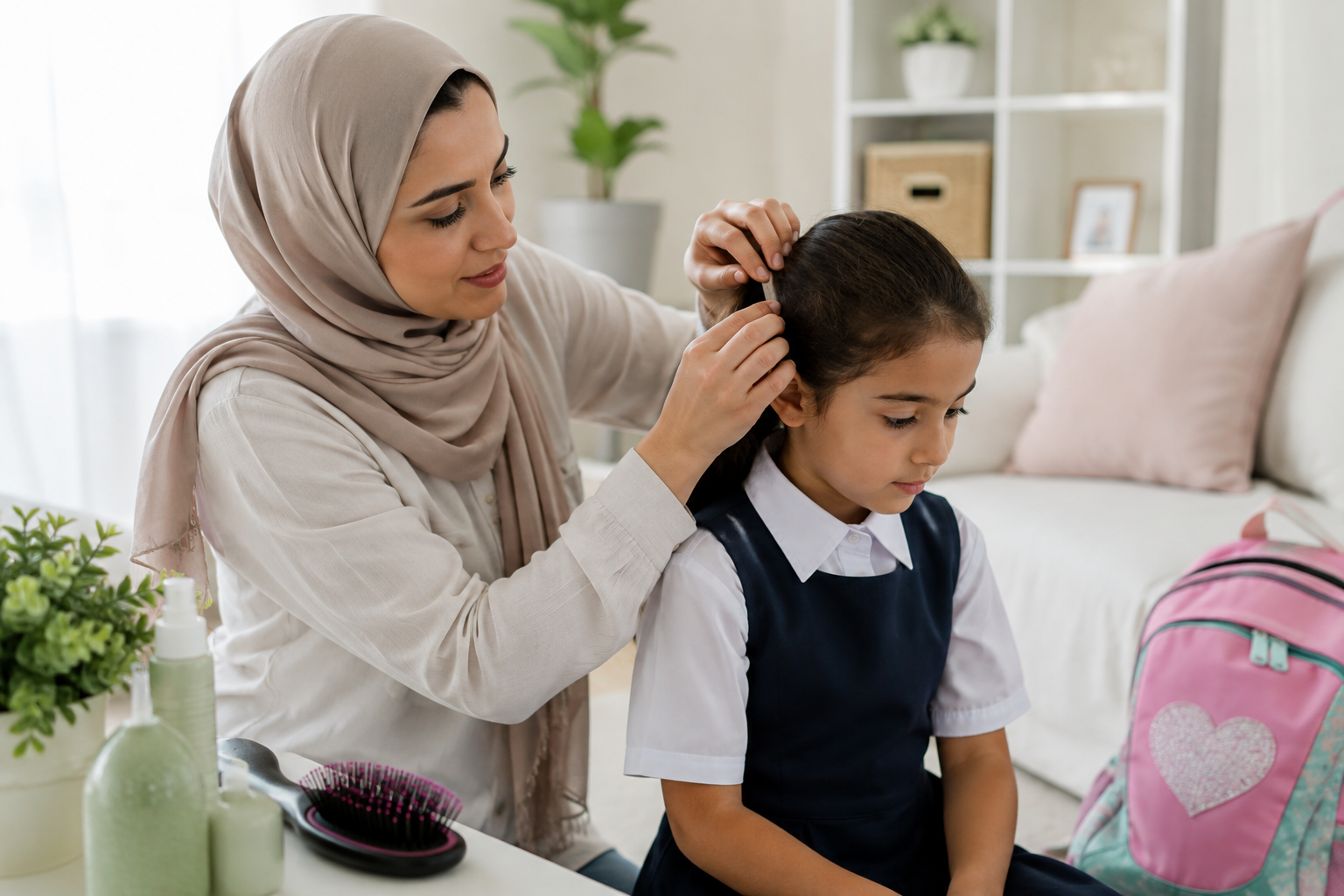
Preparing your child for a new school year involves more than buying uniforms and stationery. Adding a quick head lice check to your back-to-school routine can help detect an infestation early, reduce the risk of spreading lice to classmates and family members, and make treatment much easier if lice are found.
Head lice are common among school-aged children and are not linked to poor hygiene. They spread mainly through close head-to-head contact during everyday activities such as playing, reading together, and sports. Whether you’re checking your child’s hair at home or looking for professional lice removal near Al Bateen, knowing what to look for and acting early can help your child start the school year with confidence.
This back-to-school checklist explains how to inspect your child’s hair, recognise the signs of head lice, reduce the risk of transmission, and know when professional treatment may be appropriate.
Key Takeaways
- Head lice spread mainly through direct head-to-head contact, not because of poor hygiene.
- A five-minute hair check before school starts can help detect lice before they spread.
- Nits are firmly attached to hair shafts and require careful removal to prevent reinfestation.
- Live lice and viable nits both need to be removed to help stop the infestation from continuing.
- Regular hair checks throughout the school term can help identify new infestations early.
Why Head Lice Are Common During the Back-to-School Season
The start of a new school year brings children together in classrooms, playgrounds, after-school clubs, and sports activities. These environments naturally involve close contact, making it easier for head lice to move from one child to another.
Head lice cannot jump or fly. Instead, they crawl from one person’s hair to another during close contact. This is why outbreaks are often seen after school holidays, camps, and group activities.
Although finding lice can be stressful, it’s important to remember that they are extremely common among school-aged children. Having head lice is not a reflection of cleanliness or parenting. Even children who wash their hair regularly can become infested.
Understanding how lice spread helps parents focus on effective prevention rather than common myths.
Why Every UAE Parent Should Add a Lice Check to Their School Preparation Checklist
Most parents prepare for the new school year by buying uniforms, books, lunch boxes, and stationery. Adding a five-minute head lice check to this routine is one of the simplest ways to reduce the chance of an infestation spreading unnoticed during the first weeks of school.
Checking your child’s hair before school starts helps you:
- Detect lice before they multiply
- Reduce the chance of spreading lice to classmates
- Prevent infestations from affecting the whole family
- Avoid more time-consuming treatment later
Early detection often makes head lice easier to manage because fewer live lice and viable nits are present, reducing the chance of the infestation spreading to siblings or other close contacts. .
How to Check Your Child for Head Lice at Home
Regular hair checks are one of the simplest and most effective ways to detect head lice early. During the school term, checking your child’s hair about once a week is usually enough unless you have been told they were in close contact with someone who has head lice.
Choose a time when your child is relaxed and use bright lighting so you can inspect the hair carefully.
Step 1: Find Good Lighting
Natural daylight is ideal, but a bright lamp can also make it much easier to spot live lice and nits. Good lighting helps you see small details that may otherwise be missed.
Step 2: Divide the Hair Into Small Sections
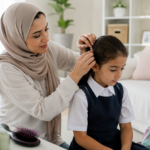
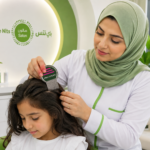
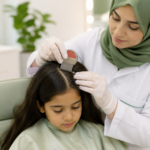
Use a comb to divide the hair into small sections and inspect one section at a time. Working methodically helps ensure that no areas are overlooked, particularly in thick or long hair.
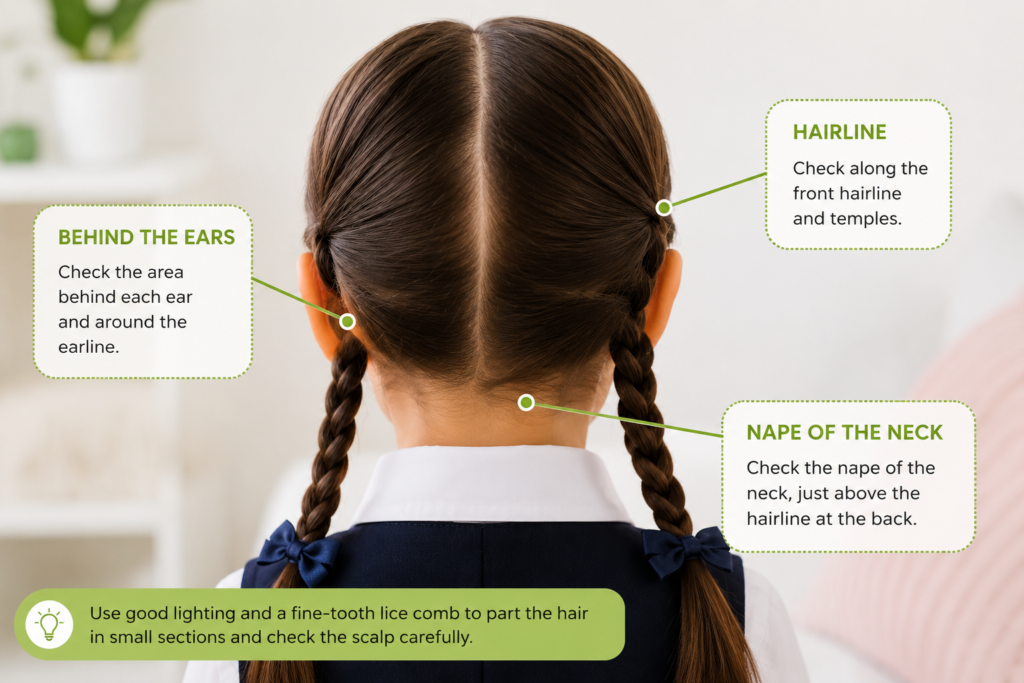
Step 3: Focus on High-Risk Areas
Pay close attention to:
- Behind the ears
- The nape of the neck
- Around the hairline
- Near the crown
These warmer areas are where lice and newly laid nits are most commonly found.
Step 4: Know What You’re Looking For
Look for:
- Live crawling lice
- Tiny oval nits attached firmly to the hair, usually close to the scalp
- Frequent scratching around the scalp
- Small red bumps caused by scratching
Unlike dandruff, hair casts, or dried hair products, nits are firmly attached to the hair shaft and do not brush away easily. If you’re unsure what you’ve found, using a fine-toothed lice comb can help with a closer inspection.
Common Mistake
Many parents assume every white particle in the hair is a nit. In reality, dandruff, hair casts, and product residue can look very similar. If you’re unsure whether you’ve found live lice or viable nits, a professional head check can help confirm whether an active infestation is present.
Get Expert Lice Removal Today
Ask the right questions before booking your appointment and choose a professional lice removal service you can trust.
Signs Your Child May Have Head Lice
Not every child with head lice will complain about an itchy scalp. In fact, some children have no symptoms at all, particularly during the early stages of an infestation. That’s why regular hair checks are just as important as watching for signs.
If your child has recently returned from school, camp, or a sleepover, pay attention to the following symptoms.
Sign | What It May Mean |
Frequent scratching | The scalp may be irritated by lice bites. |
Tickling or crawling sensation | live lice moving through the hair |
White or brown nits firmly attached to hair | May indicate a current or previous infestation. |
Small red bumps on the scalp or neck | Irritation from scratching |
Difficulty sleeping | HEad lice are often more active at night |
Seeing one of these signs doesn’t always mean your child has head lice. However, if you notice several signs together, or you find live lice or firmly attached nits during a hair check, inspect the hair carefully or seek professional advice.
Back-to-School Head Lice Checklist for Parents
Before your child returns to school, take a few minutes to work through this simple checklist. These small steps can help reduce the risk of an infestation spreading during the first weeks of term.
Checklist | Why It Matters |
Inspect your child’s hair | Helps identify lice before they spread |
Check behind the ears and nap of the neck | These are the most common areas where lice are found. |
Wash hats and pillowcases | May help remove stray lice that are no longer on the scalp. |
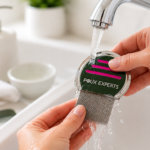
Clean brushes and combs | Helps maintain good hygiene after an infestation. |
Remind children not to share hair accessories | Reduces opportunities for close contact and sharing personal items. |
Tie back long hair | help reduce hair-to-hair contact during play |
Arrange a professional head check if you’re unsure | Provides peace of mind before school term begins |
Completing this checklist before school starts can help you feel more confident that your child is ready for the new term.
What Should You Do If You Find Head Lice?
Finding head lice can feel overwhelming, but there’s no need to panic. Acting calmly and following a clear plan is usually more effective than trying multiple treatments straight away.
If you think your child has head lice:
1.Confirm the Infestation
Check carefully for live lice or firmly attached nits close to the scalp. Remember that dandruff, hair casts, and product residue can sometimes look similar.
2. Check Other Family Members
Because head lice spread through close head-to-head contact, everyone living in the same household should be checked.
3. Choose an Appropriate Removal Method
Depending on the severity of the infestation and your confidence in removing lice and nits, you may decide to manage it at home or seek a professional lice removal provider.
4. Remove Both Live Lice and Viable Nits
Removing only the live lice may not be enough if viable nits remain close to the scalp.
5. Continue Checking the Hair
Regular hair checks over the following days can help confirm that no newly hatched lice are present.
Why Removing Nits Is Just as Important as Removing Lice
Many parents rely on over-the-counter (OTC) lice products believing they will kill both live lice and nits. While many OTC products are designed to kill live lice, they do not reliably kill every viable egg. If viable nits remain attached close to the scalp, they may hatch several days later, making it seem as though the treatment didn’t work when the lice life cycle has simply continued.
Viable nits are firmly attached to individual hairs and usually cannot be removed by washing or brushing alone. Careful manual removal helps reduce the chance of the infestation continuing and may minimise the need for repeated treatments.
Removing both live lice and viable nits helps:
- Reduce the chance of the infestation continuing
- Prevent newly hatched lice from restarting the cycle
- Minimise the need of repeated treatments
- Give parents greater confidence that the infestation has been addressed
Families looking for professional nits removal near Saadiyat may choose to seek expert assistance if they are finding it difficult to remove viable nits or are unsure whether an active infestation remains.
Take the First Step Toward a Lice-Free Life
Learn what to ask about treatment, safety, experience, and follow-up before scheduling your lice removal appointment.
What to Do Next
Once the infestation has been managed, regular hair checks remain one of the best ways to detect head lice early and reduce the chance of them spreading again. During the school year, checking your child’s hair once a week, or after close contact activities such as sleepovers or school camps, can help identify new infestations before they become more widespread.
Continue encouraging simple prevention habits, including avoiding the sharing of hair brushes, combs, hats, and hair accessories, and tying back long hair during school or group activities where practical.
If your child’s school notifies parents about a case of head lice, inspect your child’s hair as soon as possible, even if they aren’t scratching or showing any other symptoms. Many children with head lice have few or no symptoms, particularly during the early stages of an infestation.
If you’re looking for professional lice removal near Khalifa City, an early assessment can provide reassurance and help your child return to school with confidence.
Common Mistakes Parents Make
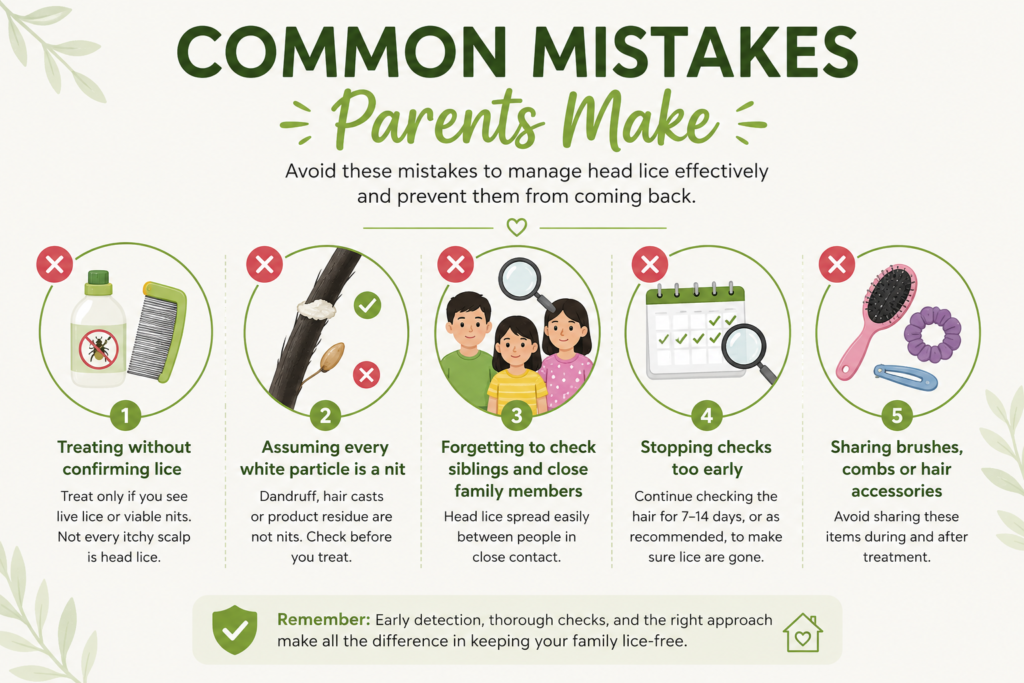
Even well-intentioned parents can make mistakes when dealing with head lice. Avoiding these common pitfalls can make managing an infestation easier and help reduce the chance of it returning.
Some of the most common mistakes include:
- Treating the hair without first confirming that live lice or viable nits are present.
- Assuming every white particle in the hair is a nit.
- Stopping treatment or hair checks too early.
- Forgetting to check siblings and other close family members.
- Relying only on over-the-counter products without addressing viable nits.
- Sharing combs, brushes, hats, or hair accessories after treatment.
- Waiting until a child starts scratching before checking the hair.
By knowing what to look for, carrying out regular hair checks, and acting early, parents can often prevent a small infestation from becoming a larger family problem.
Frequently Asked Questions
1. How often should I check my child’s hair during the school year?
Checking your child’s hair about once a week is usually enough during the school year. You should also perform an extra check if your school reports a head lice case or after activities involving close head-to-head contact, such as sleepovers or camps.
2. Can my child have head lice without scratching?
Yes. Not every child develops an itchy scalp straight away. Some children have few or no symptoms, especially during the early stages of an infestation. Regular hair checks are often the best way to detect head lice early.
3. What’s the difference between a nit and dandruff?
Nits are firmly attached to individual hairs and usually cannot be brushed away easily. Dandruff, hair casts, and product residue sit more loosely on the hair or scalp and can often be removed with gentle brushing or washing.
4. Should my child stay home from school if they have head lice?
School policies vary, so it’s best to follow your child’s school’s guidance. In general, treating head lice promptly and informing close contacts can help reduce the risk of spreading them to others.
5. Can head lice come back after treatment?
Yes. Head lice can return if viable nits remain after treatment or if your child is exposed to someone with an active infestation again. Regular follow-up hair checks and early detection help reduce the risk of repeated infestations.
6. When should I consider professional lice removal?
Professional lice removal may be helpful if home treatment hasn’t worked, you’re finding it difficult to remove viable nits, several family members are affected, or you want reassurance that the infestation has been managed thoroughly.
7. How can I help prevent head lice from spreading at school?
Encourage your child not to share hair brushes, combs, hats, or hair accessories, tie back long hair where practical, and check the hair regularly throughout the school year. Early detection is one of the most effective ways to reduce the spread of head lice.
Conclusion
Preparing your child for a new school year involves more than buying uniforms and school supplies. Adding a quick head lice check to your back-to-school routine can help detect an infestation early, reduce the risk of it spreading to classmates and family members, and make removal much easier if lice are found.
By understanding how head lice spread, recognising the early signs, carrying out regular hair checks, and avoiding common mistakes, you can help protect your child throughout the school year. Even if an infestation occurs, early action and thorough removal can help break the lice life cycle and reduce the chance of it returning.
If you’re looking for professional lice removal near Al Bateen, our experienced team is here to help. Learn more about our Head Lice Removal Services, view our Pricing, or Book an Appointment at a time that suits your family.
Know Before You Book
Make an informed choice by asking these 7 important questions before booking a professional lice removal appointment.