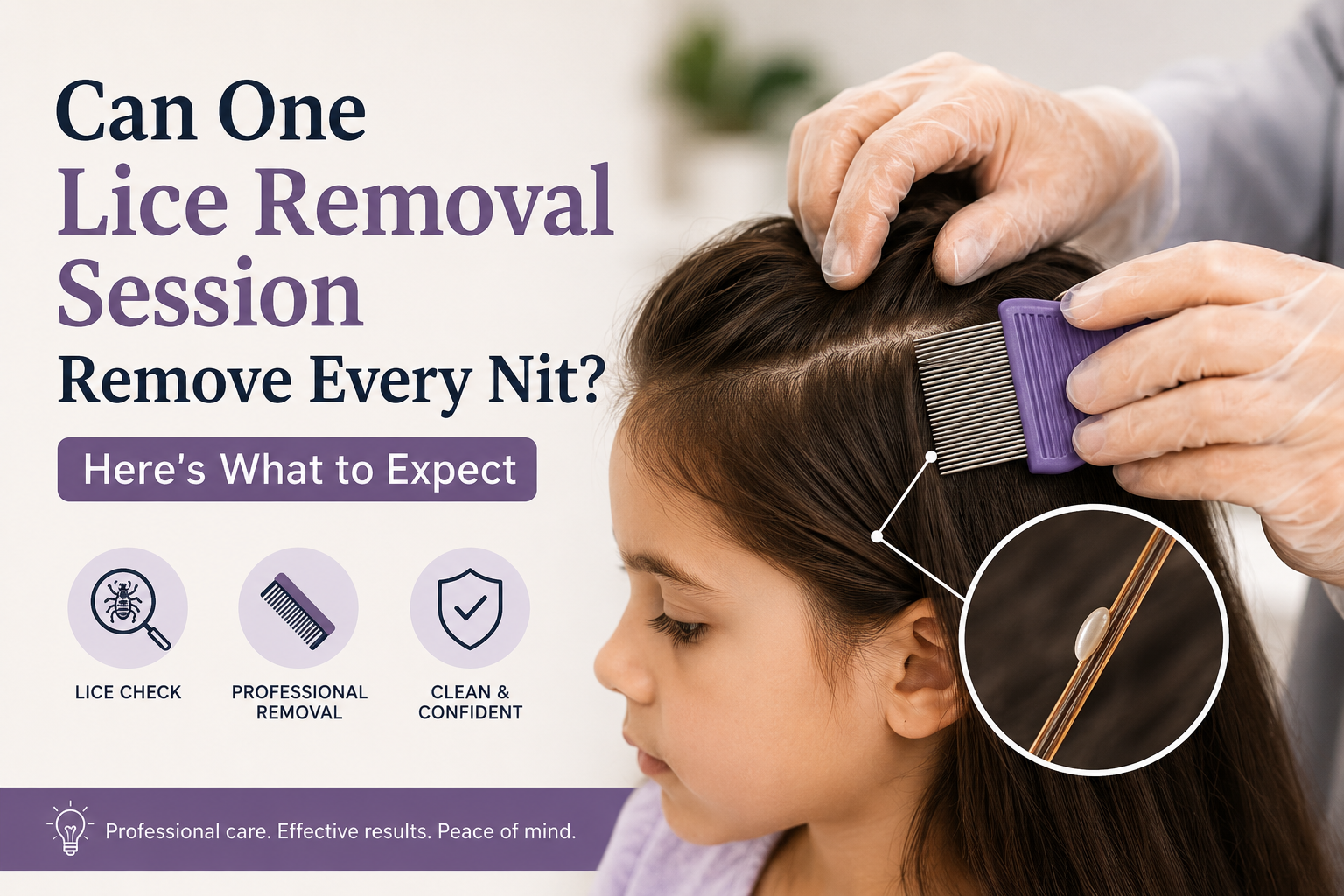
Can One Lice Removal Session Remove Every Nit? Here’s What to Expect
One of the most common questions parents ask after booking a lice removal appointment is, “Will one session remove every nit?”
The short answer is yes, for many families. However, no responsible provider can guarantee that every single viable egg will always be removed in one appointment because every infestation is different.
Whether one session is enough depends on several factors, including when the infestation was discovered, how many viable eggs are present, the hair type, and whether there is any new exposure after treatment.
Understanding these factors helps set realistic expectations and explains why some providers recommend a follow-up check, even after a thorough removal.
Key Takeaways
One professional lice removal session is enough for many families.
Early detection usually increases the likelihood of clearing the infestation in one visit.
The stage of the infestation is often more important than the number of lice present.
Very recently laid eggs may be extremely difficult to detect, even during a careful removal.
A follow-up appointment is often used to confirm success, not because the first appointment failed.
Can One Session Remove Every Nit?
In many cases, yes.
When an infestation is identified early and the removal is carried out thoroughly, one session often removes all live lice and the vast majority of viable eggs.
However, there are situations where a second visit may be recommended. This doesn’t necessarily mean the first session was unsuccessful. Rather, it reflects the biology of head lice and the fact that every infestation develops differently.
The goal is to remove all live lice and as many viable eggs as can reasonably be identified during the appointment, while recognising that every infestation is unique.
What Determines Whether One Session Is Enough?
Several factors influence whether one appointment is likely to resolve the infestation.
How Early the Infestation Was Found
Early detection makes a significant difference.
When head lice are discovered soon after they appear, there are usually fewer live lice and fewer viable eggs to remove. This often increases the likelihood that one session will be sufficient.
An infestation that has progressed through more than one stage of the head lice life cycle may include multiple generations of lice and eggs, making the removal process more complex.
The Number of Viable Eggs
The number of viable eggs is often more important than the number of live lice.
Some children may have only a few live lice but hundreds of attached eggs, while others may have several live lice with relatively few eggs.
The greater the number of viable eggs attached to the hair, the more time and precision are generally required during removal.
Hair Length, Thickness, and Texture
Every head of hair presents different challenges.
Long, thick, curly, or densely textured hair usually requires more time because the hair must be worked through carefully in small sections.
This doesn’t make successful removal impossible, but it can influence whether every viable egg is identified during one appointment.
Previous Home Removal Attempts
Home removal isn’t always unsuccessful, and many families successfully manage very recent infestations themselves.
However, repeated attempts using different methods can sometimes make the assessment more difficult. Partially removed eggs, leftover egg cases, or broken hairs may make it harder to distinguish between viable eggs, empty egg cases, and hair debris during the removal process.
Why Very New Eggs Can Be Difficult to Detect
One of the biggest reasons some providers recommend a follow-up appointment relates to the head lice life cycle.
Very recently laid eggs are extremely small and can be difficult to distinguish from the hair itself, even during a careful inspection.
If one of these tiny eggs is missed, it may hatch several days later. This doesn’t necessarily mean the original removal was incomplete. It simply reflects that the egg was at a very early stage of development and difficult to identify at the time of the appointment.
This is one reason why many experienced providers recommend monitoring the hair after treatment and, in some cases, arranging a follow-up check.
Does a Follow-Up Mean the First Session Didn’t Work?
Not necessarily.
Many parents worry that needing a follow-up appointment means the initial removal wasn’t successful. In most cases, that’s not true.
A follow-up is often recommended because of the head lice life cycle, not because the first appointment failed. It provides an opportunity to confirm that no newly hatched lice are present and that the infestation has been successfully resolved.
Different providers have different follow-up policies. Some include a follow-up appointment as part of their service, while others recommend returning only if further signs of lice appear.
Finding lice during a follow-up doesn’t always mean the original removal was unsuccessful. The type of louse found is important.
If a newly hatched nymph is found, it may have emerged from a viable egg that was too newly laid to be detected and removed during the initial treatment. This is one reason some providers recommend a follow-up check based on the head lice life cycle.
If an adult louse is found, it is generally more suggestive of a new infestation than a continuation of the original one. Adult lice are most commonly acquired through new head-to-head contact with someone who has an active infestation, although in rare cases, indirect transmission from a recently contaminated personal item may also be possible.
An experienced assessment can help determine whether the finding relates to the original infestation or a new exposure, ensuring the most appropriate next steps are taken.
How Can You Tell If the Removal Was Successful?
The best way to confirm that a lice removal session has been successful is to follow your provider’s recommended follow-up process.
Follow-up policies vary between providers. Understanding your provider’s policy helps you know what to expect after the initial removal.
At Bye Nits, we include a complimentary Day 7 follow-up check because this timing aligns with the head lice life cycle. If live nymphs or viable eggs related to the original infestation are found during this visit, the appropriate treatment is provided at no additional cost. If live adult lice are found, this usually indicates a new infestation rather than a continuation of the original one.
Even after a successful removal, empty egg cases may remain attached to the hair. These cannot hatch and will gradually move away from the scalp as the hair grows. For this reason, finding an empty egg case in the hair does not necessarily mean the infestation is still active.
Why Some Providers Guarantee Results and Others Don’t
If you’ve compared different lice removal services, you may have noticed that their guarantees and follow-up policies vary considerably.
This doesn’t necessarily mean one provider is better than another. Providers design their services differently based on their treatment approach, pricing structure, and the level of follow-up they choose to include.
For example:
Some providers include a follow-up appointment as part of the treatment fee.
Some offer a follow-up check but charge separately if additional treatment is needed.
Others recommend returning only if further signs of lice appear.
Some providers do not include routine follow-up appointments, allowing them to offer a lower initial treatment price.
Before booking, it’s worth asking:
-Is a follow-up appointment included?
-If lice are found during the follow-up, is additional treatment included or charged separately?
-How long is the guarantee valid?
-What is considered a continuation of the original infestation versus a new infestation?
-Understanding these differences allows families to compare services based on the overall support they receive, not just the initial price.
The Goal Isn’t Perfection. It’s a Cleared Infestation.
Parents often focus on whether every single nit has been removed.
In practice, the goal is to successfully resolve the infestation by removing the live lice, addressing viable eggs, and confirming the result through appropriate follow-up when needed.
Understanding this difference helps set realistic expectations and reduces unnecessary worry. A successful outcome isn’t measured by perfection on the day of treatment, but by the absence of an active infestation in the days that follow.
Conclusion
So, can one lice removal session remove every nit?
For many families, yes, especially when the infestation is identified early and managed thoroughly.
However, no responsible provider can promise that every single viable egg will always be removed in one appointment. Factors such as the stage of the infestation, hair type, and the presence of very recently laid eggs all influence the outcome.
Understanding what affects the results, knowing what questions to ask before booking, and following your provider’s aftercare recommendations can help you make informed decisions and feel more confident throughout the process.
Frequently Asked Questions
Can one lice removal session really remove every nit?
In many cases, yes. However, the outcome depends on how early the infestation was detected, the number of viable eggs present, the hair type, and the stage of the head lice life cycle.
Why can’t every provider guarantee that every nit will be removed?
Because every infestation is different. Factors such as very recently laid eggs, hair type, and the possibility of reinfestation mean that no provider can honestly promise the same outcome for every case.
Does needing a follow-up mean the first treatment failed?
No. Many providers recommend a follow-up to confirm the outcome and check for newly hatched nymphs. It is often part of the treatment plan rather than a sign of failure.
Can I still find empty egg cases after a successful treatment?
Yes. Empty egg cases cannot hatch and may remain attached to the hair until they grow out naturally or are removed during combing.
Is one session more likely to be enough if lice are found early?
Yes. Early detection usually means there are fewer live lice and viable eggs to remove, increasing the likelihood that one session will successfully resolve the infestation.
What questions should I ask about a provider’s follow-up policy?
Ask whether a follow-up appointment is included, whether additional treatment is covered if lice are found again, how long the policy remains valid, and how the provider distinguishes between the original infestation and a new one.
Can I get lice again after a successful removal?
Yes. A successful removal clears the current infestation but doesn’t prevent a new one. Head lice can be picked up again through close head-to-head contact with someone who has an active infestation.
Why does Bye Nits include a Day 7 follow-up?
Our complimentary Day 7 follow-up is scheduled around the head lice life cycle. It allows us to confirm that the treated infestation has remained clear while providing additional reassurance for families.
Discover Expert Lice Care in the UAE
Where precision, protection, and peace of mind come together.